
Search intent is the reason why someone types a query into Google.
And today, it’s one of the most important ranking factors in SEO.
You can have:
-
Great content
-
Strong backlinks
-
Perfect technical SEO
But if your page doesn’t match search intent, it won’t rank.
In this guide, you’ll learn exactly what search intent is, why it matters, and how to optimize your content to match it—step by step.
What Is Search Intent?
Search intent (also called user intent) is the goal behind a search.
In other words:
What is the user actually trying to do?
For example:
-
“What is SEO?” → learn something
-
“Best SEO tools” → compare options
-
“Buy SEO software” → take action
The keyword is only the surface.
Intent is the real signal.
Why Search Intent Matters So Much for SEO
Google’s #1 goal is simple:
Give users the most helpful result.
That’s why Google ranks pages that best satisfy intent—not pages that use keywords correctly.
When your content matches search intent:
-
Rankings improve
-
Click-through rate increases
-
Bounce rate drops
-
Engagement goes up
When it doesn’t:
-
Your page gets replaced by one that does
It’s that simple.
The 4 Types of Search Intent (You Must Know These)
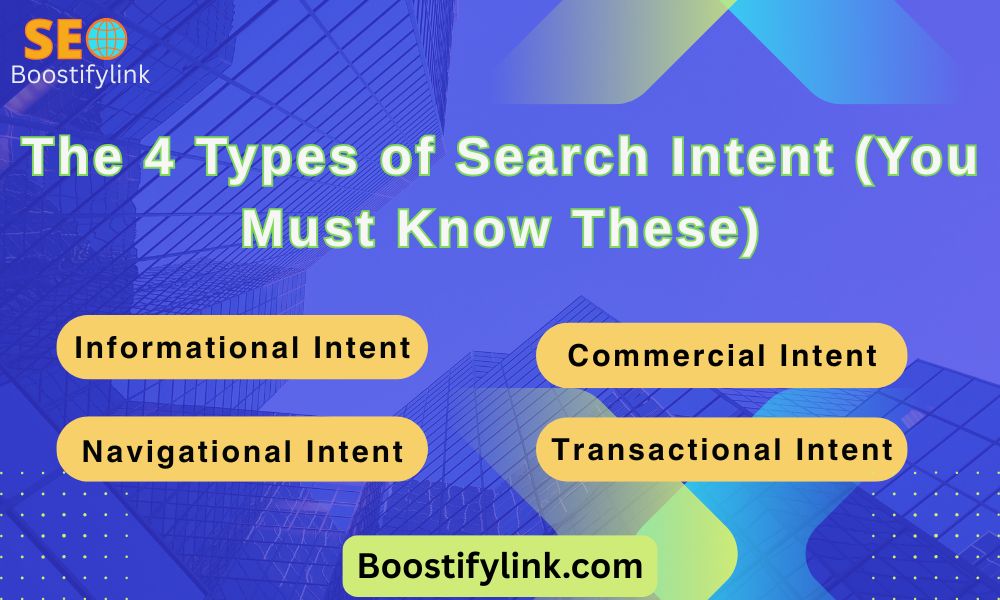
Every search query falls into one of these four categories.
1. Informational Intent
The user wants to learn.
Examples:
-
“What is search intent?
-
“How does SEO work?
-
Keyword research basics
What Google ranks:
-
Blog posts
-
Guides
-
Tutorials
-
Explainers
👉 If the intent is informational, don’t sell. Educate.
2. Navigational Intent
The user wants to reach a specific website or page.
Examples:
-
“Google Search Console”
-
“Backlinko blog”
-
“Ahrefs login”
What Google ranks:
-
Brand pages
-
Homepages
-
Specific URLs
👉 You don’t optimize for these unless it’s your brand.
3. Commercial Investigation Intent
The user is researching before deciding.
Examples:
-
“Best SEO tools”
-
“Ahrefs vs SEMrush”
-
“SEO agency reviews”
What Google ranks:
-
Comparison posts
-
Listicles
-
Reviews
-
Case studies
👉 This is where trust and clarity win.
4. Transactional Intent
The user is ready to take action.
Examples:
-
Buy SEO software.
-
Hire an SEO consultant.
-
SEO services pricing
What Google ranks:
-
Product pages
-
Service pages
-
Landing pages
👉 Blog posts rarely rank here. Pages built to convert do.
How Google Figures Out Search Intent
Google doesn’t guess intent.
It observes behaviour.
Google looks at:
-
Which pages users click
-
How long do they stay
-
Whether they return to search
-
What type of content consistently satisfies users
That’s why the current top results are your best clue.
How to Identify Search Intent (The Exact Process)
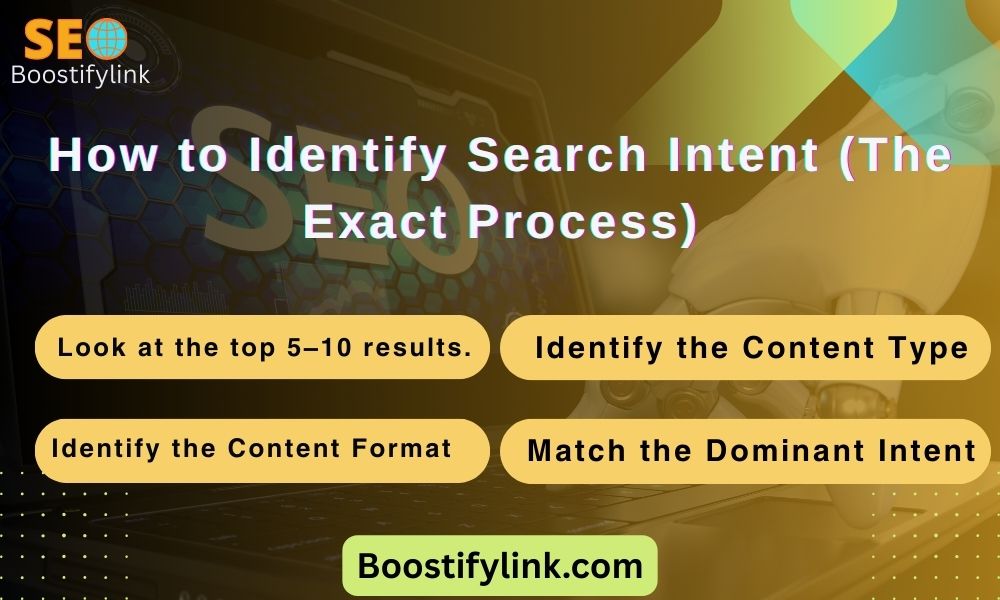
This is the same process used by top SEO professionals.
Step 1: Google the Keyword
Look at the top 5–10 results.
Step 2: Identify the Content Type
Are they:
-
Blog posts?
-
Product pages?
-
Comparisons?
-
Videos?
Step 3: Identify the Content Format
Are they:
-
How-to guides?
-
Lists?
-
Reviews?
-
Tutorials?
Step 4: Match the Dominant Intent
Create the same type of content—but better.
👉 Don’t fight Google. Align with it.
The 1 Search Intent Mistake (That Kills Rankings)
Trying to rank the wrong page type.
Examples:
-
A product page targeting “what is SEO.
-
A blog post targeting “buy SEO tools
-
A guide trying to convert transactional traffic
Even great content fails when the intent is wrong.
How to Optimize Content for Search Intent
Here’s how Backlinko-style SEO handles intent.
Match the Right Page Type
-
Informational → Blog post or guide
-
Commercial → Comparison or review
-
Transactional → Product or service page
No exceptions.
Confirm Intent in the First 5 Seconds
Users should instantly know:
“Yes—this is exactly what I was looking for.”
Your:
-
Title
-
Intro
-
Headings
must confirm intent immediately.
Structure Content Around the User Goal
If users want:
-
An explanation → explain clearly
-
Options → compare fairly
-
A solution → guide them
Don’t mix intents on one page.
Search Intent + Keyword Research = Real SEO
Keyword research tells you:
-
What people search
Search intent tells you:
-
Why they search
Ignoring intent is why many SEO strategies fail.
Winning SEO combines:
-
The right keyword
-
With the right intent
-
On the right page
Why Search Intent Is Future-Proof SEO
Algorithms change.
User expectations don’t.
Pages that match intent:
-
Rank longer
-
Survive updates
-
Build authority
-
Earn trust
That’s why intent-focused SEO always wins.
Final Thoughts
Search intent is not an SEO trick.
It’s the foundation of modern search optimization.
If your page:
-
Answers the right question
-
In the right format
-
For the right audience
Google has no reason not to rank it.
Get intent right—and everything else becomes easier.