
SEO copywriting is not about forcing keywords into content. It is about writing in a way that helps readers while making it easy for search engines to understand what the page is about. When content is genuinely valuable, well-structured, and clearly written, SEO becomes a natural outcome rather than a separate task.
This guide explains practical SEO copywriting tips that help you write content that is both helpful for users and search-friendly for search engines.
Why SEO Copywriting Matters Today
Search engines have become much better at evaluating content quality. Pages that are written only to rank—without real value—often struggle to perform long term.
Good SEO copywriting:
Helps readers understand a topic clearly
Keeps users engaged longer
Builds trust and credibility
Makes it easier for search engines to interpret content
The goal is not to impress algorithms, but to serve readers well.
Understand Search Intent Before You Start Writing

Before writing a single word, it is essential to understand why someone is searching.
Search intent generally falls into a few categories:
Informational (looking for answers or explanations)
Commercial (researching options)
Transactional (ready to take action)
SEO copywriting works best when the content clearly matches the reader’s intent. If someone is looking to learn, the content should explain. If they are comparing options, the content should guide decision-making.
Start With a Clear Topic, Not Just Keywords
One common mistake in SEO copywriting is starting with a list of keywords instead of a clear topic.
A better approach is to:
Define the main topic of the page
Identify what the reader wants to understand about that topic
Use keywords as support, not as the foundation
When the topic is clear, keywords fit naturally into the content without forcing them.
Write for Humans First, Search Engines Second
Search engines are designed to reward content that people find helpful. That means writing in a natural, conversational, and clear way.
Effective SEO copywriting:
Uses simple, direct language
Avoids unnecessary jargon
Explains ideas as if speaking to a real person
If content sounds unnatural when read aloud, it is usually a sign that it has been over-optimized.
Use Keywords Naturally and Strategically
Keywords are still important, but how they are used matters more than how often they appear.
Best practices include:
Using primary keywords naturally in titles and headings
Including variations where they fit logically
Avoiding repetition that disrupts readability
Search engines understand context, so writing clearly and naturally is more effective than repeating the exact phrase.
Create Clear, Helpful Headings and Subheadings
Headings play a significant role in both readability and SEO. They help readers scan content and help search engines understand structure.
Good headings:
Clearly explain what each section covers
Break content into logical parts
Improve accessibility and usability
Well-structured content is easier to read, understand, and rank.
Make Content Easy to Read and Skimmable
Most readers do not read online content word-for-word. They scan.
To improve readability:
Use short paragraphs
Write clear, concise sentences
Use lists where appropriate
Leave enough spacing between sections
Skimmable content improves user experience and keeps readers engaged longer.
Add Real Value, Not Filler Content
Search-friendly content is not about length—it is about usefulness.
Instead of adding filler:
Answer fundamental questions users have
Explain concepts clearly and practically
Share insights that help readers understand or apply information
Original, helpful explanations are what separate strong content from generic articles.
Optimize Without Hurting Readability
SEO optimization should support content, not dominate it.
This means:
Writing page titles that accurately reflect the content
Creating meta descriptions that explain value clearly
Avoiding forced keyword placement
When optimization aligns with clarity, both users and search engines benefit.
Edit, Improve, and Update Content Regularly
SEO copywriting does not end at publication. Content should be reviewed and improved over time.
Regular updates help:
Keep information accurate
Improve clarity and structure
Reflect changes in search behavior
Well-maintained content often performs better than newly published but unrefined pages.
Common SEO Copywriting Mistakes to Avoid
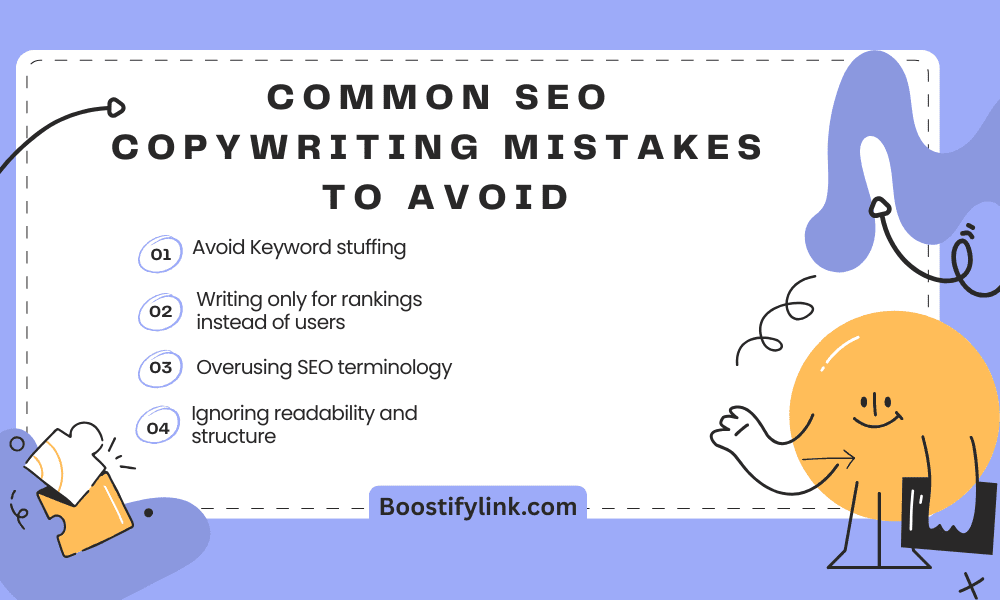
Some mistakes can reduce both content quality and SEO performance:
Keyword stuffing
Writing only for rankings instead of users
Overusing SEO terminology
Ignoring readability and structure
Avoiding these issues helps content remain useful and trustworthy.
Conclusion: Helpful Content Is the Foundation of SEO
SEO copywriting works best when it focuses on people first. Clear writing, logical structure, and genuine usefulness are what drive long-term success in search results.
When content helps readers understand, decide, or solve a problem, search engines tend to reward it naturally. Instead of chasing algorithms, focus on writing content that deserves attention—and rankings will follow.