
Local search is not an option for companies seeking long-term growth. Local search presence has a direct effect on leads, confidence, and income, regardless of your business size, industry, or number of locations. This guide will help you dissect what Local SEO is, how it works, and the most appropriate strategies to achieve long-term success.
What Is Local SEO?

Local SEO (Local Search Engine Optimization) is the effort to promote your online presence to attract more customers through location-based search on Google and other search engines.
Such searches commonly involve:
- “near me”
- city or area names
- service + location (e.g., plumber in Dubai)
Local SEO aims at enhancing exposure in:
- Google Maps
- Local Pack results
- Domestic organic search results.
In contrast to conventional SEO, Local SEO focuses on high-intent users actively searching for nearby businesses.
The significance of Local SEO to long-term business success.
Local SEO does not work through quick gains; the idea is to create consistent visibility and trust over time.
1. High-Intent Traffic That Converts
Local searchers are often willing to act – call, visit, or purchase. Local keyword positioning will attract quality traffic, not just numbers.
2. Builds Local Trust and Authority
Being on the first few pages of the local search results makes your business appear to have been around and is trustworthy. The reviews, listing, and mentions local enhance brand credibility.
3. Long-Term Cost Efficiency
Local SEO can be optimized and, once optimized, does not require constant ad spend; hence, it is one of the most cost-effective digital marketing plans.
4. Competitive Advantage Over Bigger Brands
Local SEO positively influences the presence of smaller businesses competing with large companies in areas where specific geographic locations are dominant.
How Local SEO Works (Simple Breakdown)
Local SEO is based on three factors:
- Relevance – The quality of your business in relation to the search query.
- Distance – The proximity of your business to the person doing the search
- Prominence – The way your business looks online is trusted and well-known.
The factors Google considers include your site, business listings, customer reviews, and local indicators.
7 Local SEO Strategy (Step-by-Step).
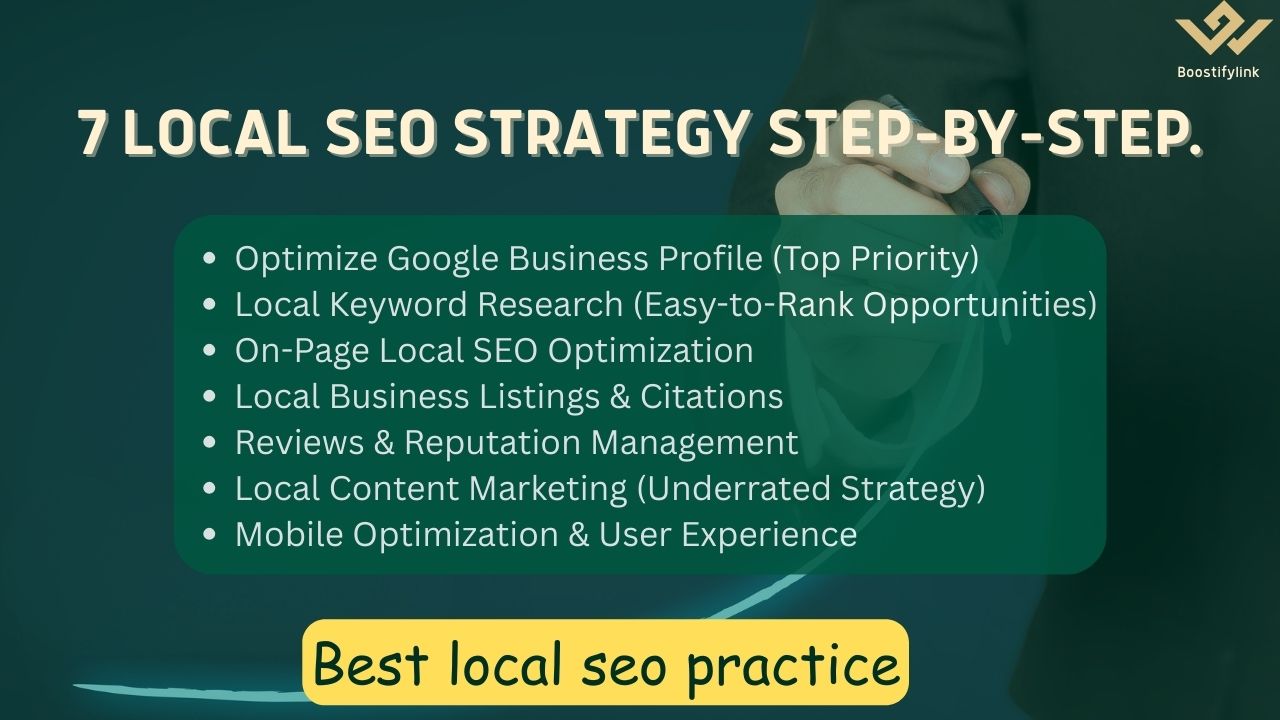
1. Optimize Google Business Profile (Top Priority)
Local SEO is based on the Google Business Profile (GBP).
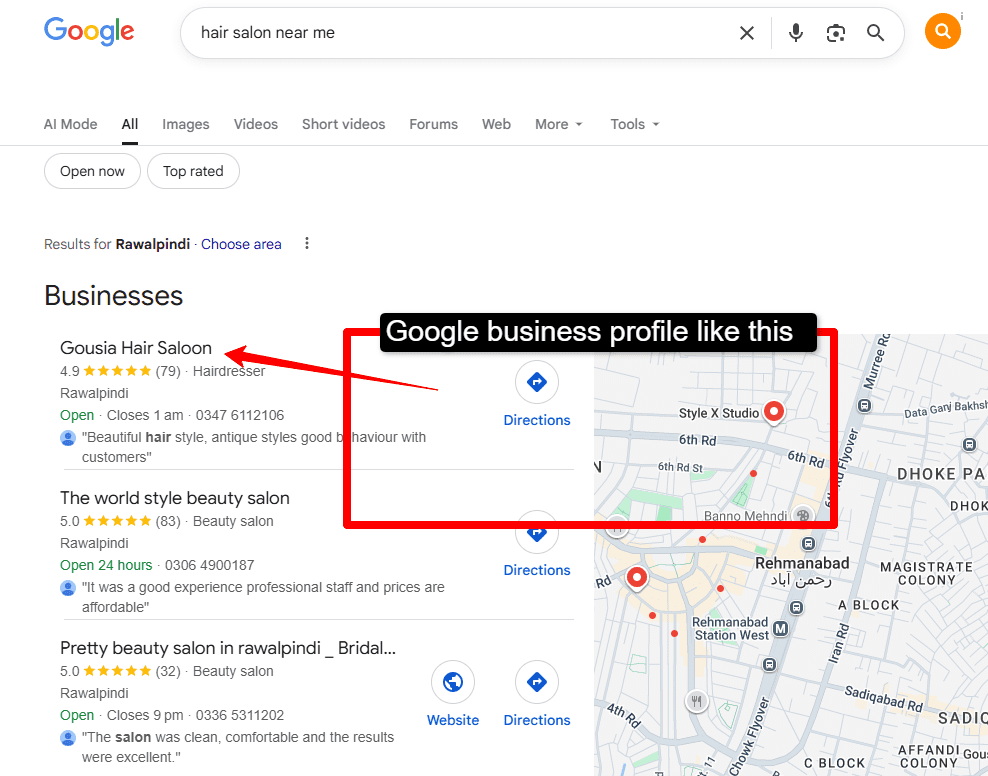
Best practices:
- Should use the correct business name (no keyword stuffing)
- Choose the foremost category that is correct.
- Add services with elaborated descriptions.
- Post genuine pictures regularly.
- Keep business hours updated
- Post updates and offers
Ranking tip: Active profiles for the business are more likely to appear in local results.
2. Local Keyword Research (Easy-to-Rank Opportunities)
Focus on low-competition, location-based keywords such as:
- service + city
- service + area
- best + service + location
- affordable + service + city
Examples:
- Local SEO services in Dubai
- Nearest marketing digital agency.
- Business listings in the UAE
These are keywords that are simple to rank and attract specific traffic.
3. On-Page Local SEO Optimization
You have to tell where you operate on your website clearly
Key optimizations:
- Have the city/area as the title tags and meta descriptions.
- Add H1 and H2 headings for the location-based section.
- Design specific location pages (where necessary)
- Add Google Maps to contact pages.
- Insert the NAP (Name, Address, Phone) in the footer.
👉 Unique tip: Use natural language instead of repeating city names unnaturally—this helps with EEAT.
4. Local Business Listings & Citations
The presence of a business in reliable directories helps to build local credibility.
Best practices:
- Post on pertinent business directories in the UAE.
- Maintain NAP records the same way all over.
- Please do not use spammy or poor-quality directories.
- Renew old listings regularly.
Citations are signals of trust to Google and can enhance local positions in the long run.
5. Reviews & Reputation Management
Reviews directly affect rankings and conversions.
Local SEO review strategy:
- Request pleased clients to review Google.
- React to all reviews in a professional way.
- Fake or paid reviews are to be avoided.
- Naturally use keywords in a response (without coercion).
Fact: Positive reviews tend to push the business to the top and increase clicks.
6. Local Content Marketing (Underrated Strategy)
Write content that attracts your local audience, not just search engines.
Content ideas:
- Local guides and tips
- Area-specific FAQs
- Local case studies of customers.
- The articles on the best services in the city.
- When it comes to your industry, local news, or updates.
This will allow you to rank on long-tail local keywords, which are easier to rank and more stable.
7. Mobile Optimization & User Experience
Local search is mainly conducted through mobile devices.
Ensure:
- Fast loading speed
- Mobile-friendly design
- Click-to-call buttons
- Easy navigation
The rankings and conversions are negatively affected by a poor mobile experience.
Unique Local SEO Practices Most Businesses Miss
- Business details should be marked up using the local schema.
- Optimize pictures using geo-relevant file names.
- Get local backlinks in blogs, news sites, and community pages.
- Build pages on service areas rather than stuffing them with keywords.
- Measure the performance based on Google Search Engine (location queries).
Such minor measures stabilize rankings over time.
Common Local SEO Mistakes to Avoid
- Poor consistency of business information.
- Stuffing of keywords in a business name.
- Ignoring negative reviews
- Applying duplicate content to the location.
- Using Google Business Profile alone.
These errors should be avoided because they would help your site avoid rank loss.