
Many newcomers believe that keyword research is the last task; in fact, it is the first step. Finding the right keywords tells you what people are searching for, but the next step is to determine whether you will rank for them.
Here is a simple, practical guide to the next steps after keyword research, grounded in actual SEO processes and tactics that work for both inexperienced and experienced professionals.
Group Your Keywords by Search Intent
Once you have a keyword list, your first step is to understand what people want when they search for those terms.
Break your keywords into these groups:
Informational: users want answers
How-to: users want steps
Commercial: users are comparing options
Transactional: users are ready to buy
This helps you decide whether you need a blog post, a guide, a comparison page, or a landing page.
Build Topic Clusters (Don’t Create Random Content)
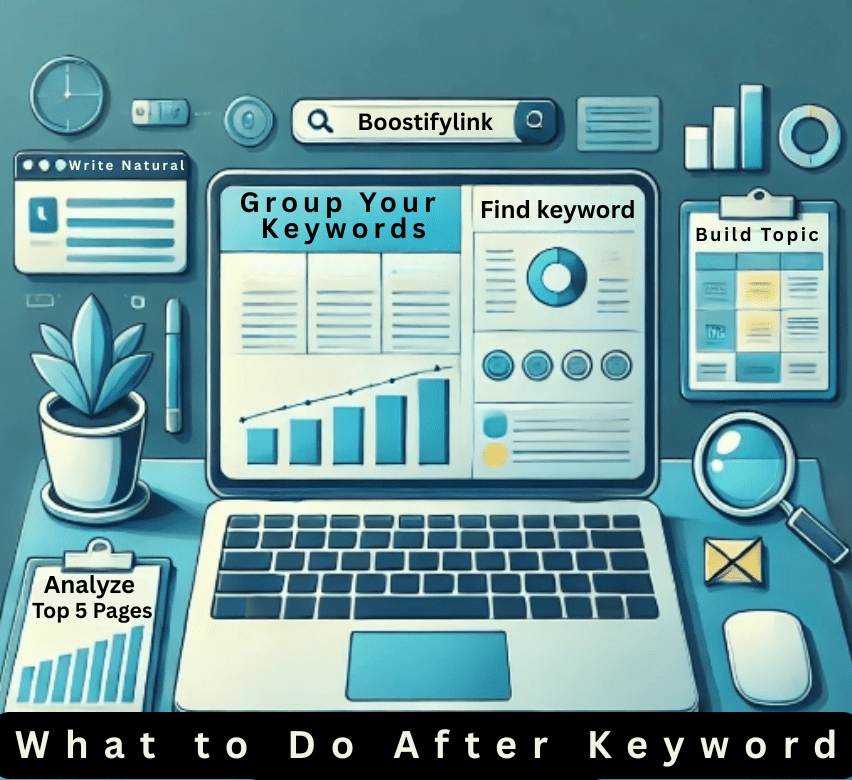
Keyword lists often look big and confusing. That’s why smart SEOs create topic clusters — small groups of keywords under one main topic.
Example:
Main keyword → On-page SEO
Supporting keywords → title tags, meta descriptions, internal links, SEO headings
This structure:
improves rankings
signals topical authority
helps Google understand your expertise
Choose One Main Keyword Per Page
To avoid keyword cannibalization, assign one primary keyword to each page.
Supporting keywords can be naturally incorporated into the content.
This helps your page stay focused and rank more clearly.
Create a Content Outline Based on Your Research
Before writing content, create a brief outline of what users expect.
This should include:
A clear introduction
H2/H3 headings based on search intent
FAQs users actually ask
Examples, steps, or frameworks
Google rewards structured, easy-to-read content.
Analyze the Top 5 Pages Already Ranking
Before writing, always check what Google currently ranks.
Look at the top 5 ranking pages and ask:
What format do they use? (guide, list, comparison?)
What questions do they answer?
What type of visuals do they include?
What is missing that you can do better?
You don’t copy them — you outperform them.
Optimize Your On-Page Elements
Now turn your keyword research into real SEO signals.
Optimize:
Title tag
Meta description
URL
Headings (H1, H2, H3)
Internal links
Image alt text
These elements help search engines understand what your page is about.
Write Natural, Helpful, Human Content
Google’s 2025 updates focus on helpful content, not keyword density.
Your writing should be:
simple
conversational
structured
relevant
original
user-focused
Use your keywords naturally, not repeatedly.
Add Internal Links to Strengthen Your Topic Cluster
Internal links pass authority around your website.
Link to:
related blog posts
guides
supporting articles
service/product pages
This helps Google crawl your site and improves keyword rankings.
Publish, Fetch, and Monitor Performance in Search Console
After publishing:
Submit the URL in Google Search Console
Monitor impressions and clicks
Track how your page appears over time
Improve your content based on real data
SEO is a continuous cycle — not a one-time task.
Update and Improve Content Based on Data
Beginners forget one thing:
Content needs updates to stay relevant.
Improve your page when:
Your keyword drops in ranking
competitors update their pages
user questions change
Google updates happen
Fresh content performs better.
Conclusion
They understand what to do after keyword research, which is crucial for effectively moving to the next step of your set of keywords. Therefore, keyword mapping and optimization, link building, and tracking can easily enhance one’s search engine visibility, drive more traffic, and increase conversions.
FAQs: What to Do After Keyword Research
1. What is the next step after keyword research?
The next step is to group your keywords by search intent and decide what type of content you need to create — such as a guide, blog post, comparison page, or landing page.
2. Should I use all my keywords in one article?
No. Each page should target one primary keyword. Supporting keywords can be used naturally, but stuffing them harms readability and SEO.
3. How do I decide which keyword to target first?
Start with keywords that have low difficulty, clear intent, and realistic ranking potential — especially if your website is new or has low authority.
4. What comes after choosing the main keyword?
Create a content outline, analyse what top-ranking pages include, and structure your content to answer user questions better than competitors.
5. Do I need to optimize on-page SEO after keyword research?
Yes. On-page optimisation — such as titles, headings, URLs, internal links, and meta descriptions — helps search engines understand your topic clearly.